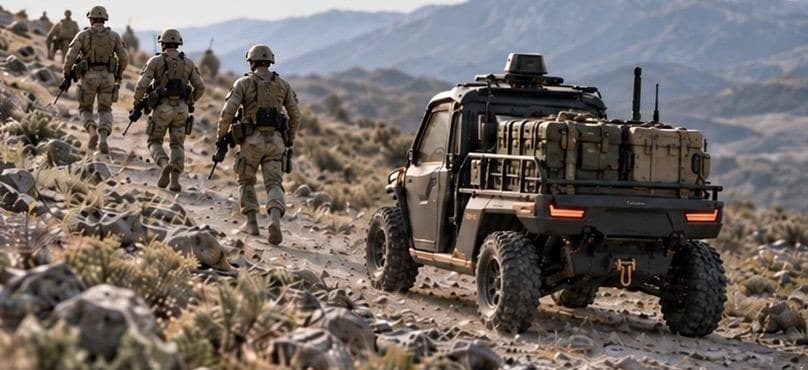
Soldier load carriagePhase 1
Follows a dismounted unit a few metres behind with ammunition, batteries, water and mission equipment. Less weight on each soldier, more capability forward.
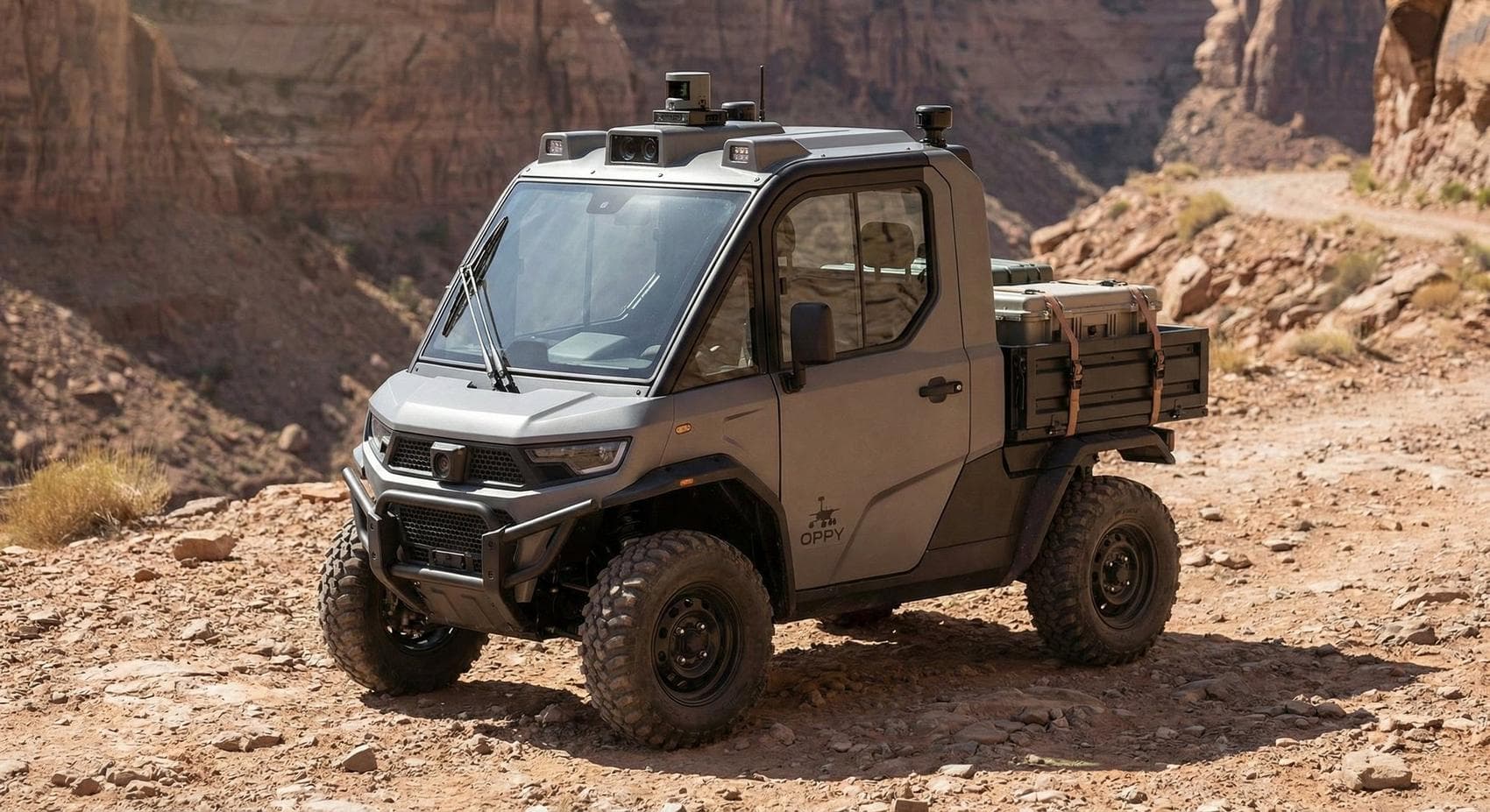
Concept render
OPPY is a low-cost, dual-use intelligent utility vehicle. It follows a person over rough ground and takes the load, and it still has a seat for the drive home.
Design targets for the full version.
On the trail, in the field and at a forward position: one platform across its missions.
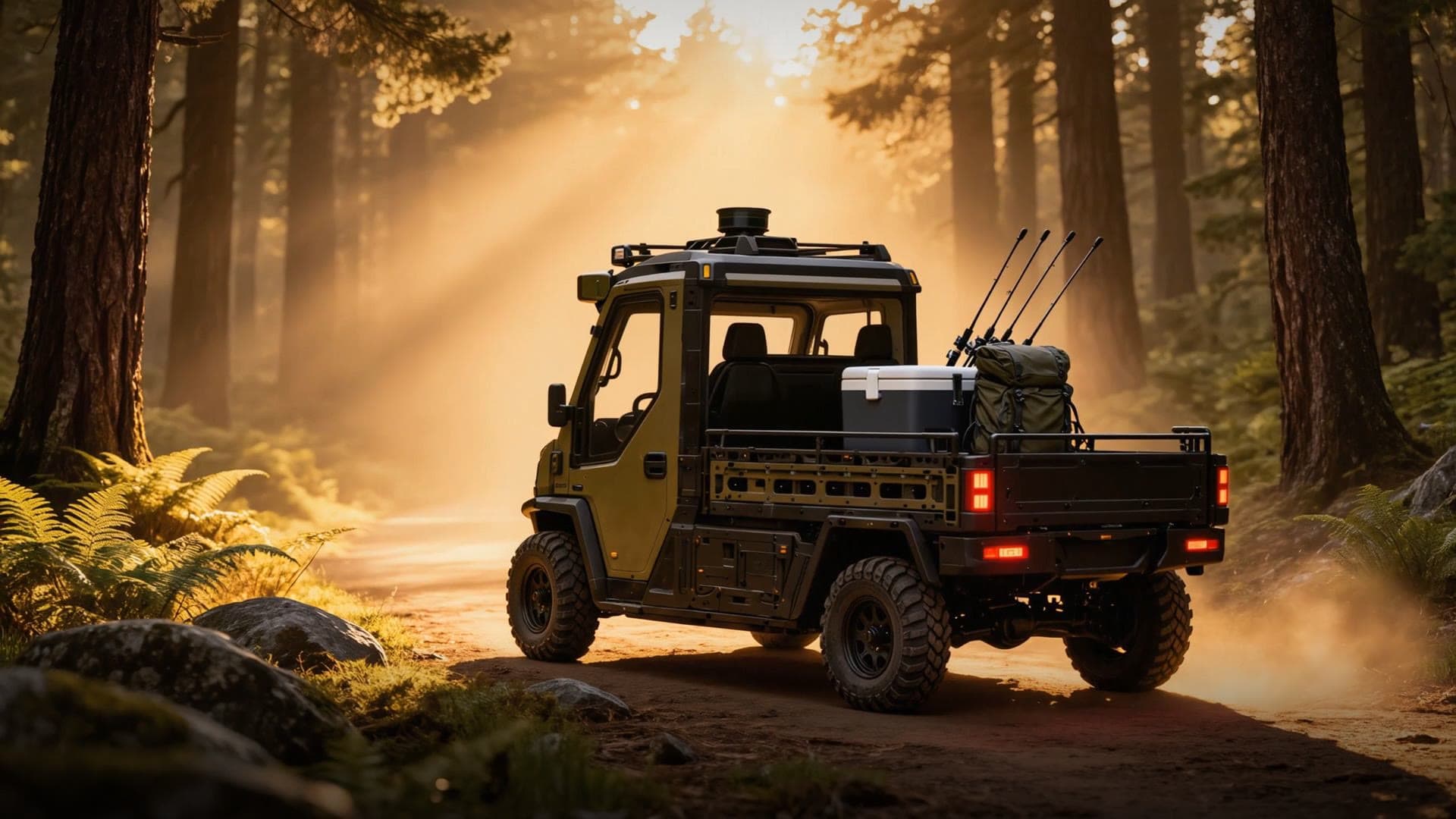
Soldiers, farmers, forestry crews and guides face the same problem: the last few kilometres are off-road, and someone has to carry the load.
A production vehicle, made intelligent. Follows a person, takes the load.
They follow and operate uncrewed, at defence-program prices.
Cheap and everywhere. A person drives every one of them.
Affordable vehicles are not intelligent.
Intelligent vehicles are not affordable.
OPPY is both.
Useful intelligence first. Autonomy grows from there.
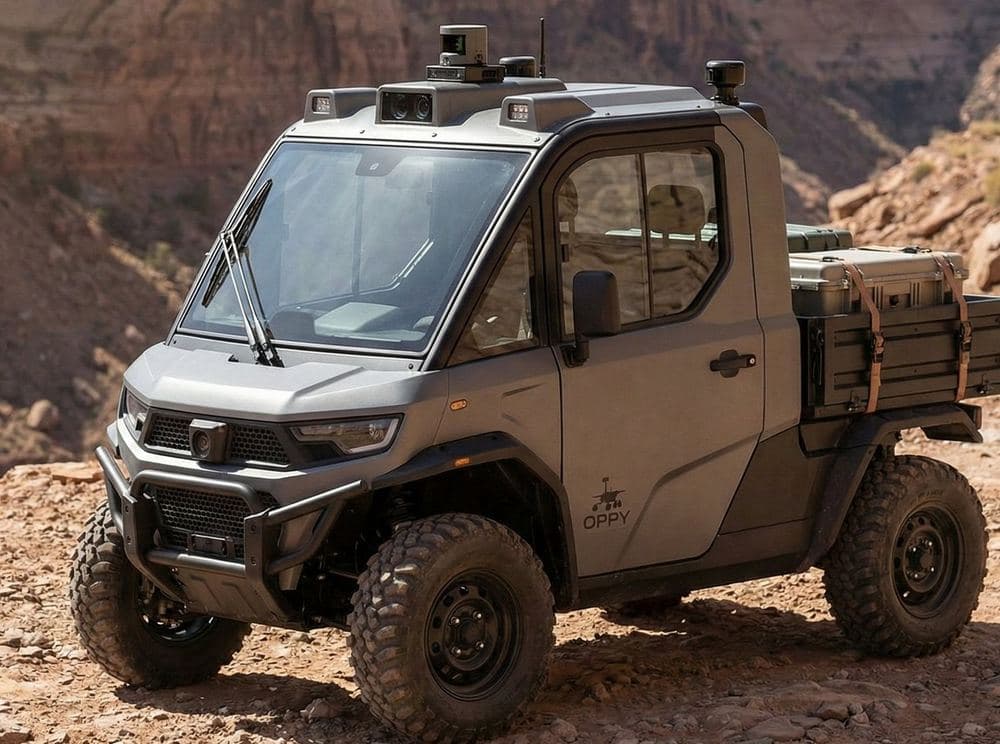
It follows you out. It carries you back.
Walk the trail, fish the river, work the block, then ride home when you have had enough. A follower with no seat cannot do this, and a vehicle with a seat cannot follow.
The same vehicle, reconfigured. Not four different programs.
Follows a dismounted unit a few metres behind with ammunition, batteries, water and mission equipment. Less weight on each soldier, more capability forward.
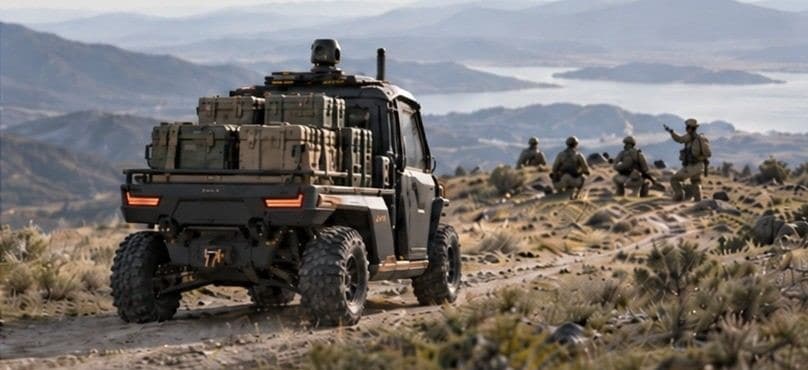
A rear position loads OPPY and sends it forward on its own. No extra driver, and no extra person exposed on the route.
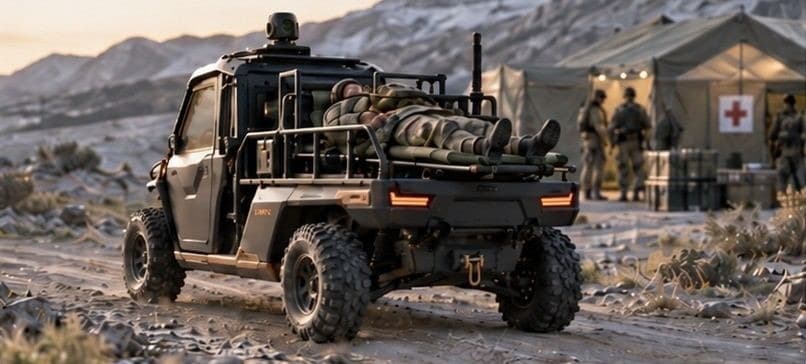
Moves wounded personnel from a forward position back toward an aid point without diverting a soldier to drive.
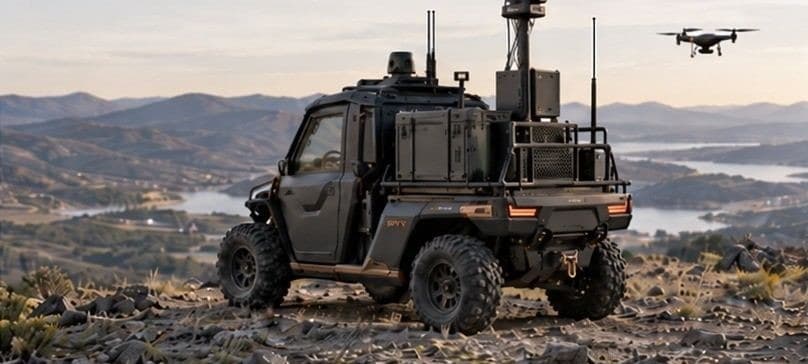
The same base vehicle carries communications, surveillance or other mission payloads as requirements change.
Concept renderings.
Load carriage and resupply are Phase 1 capability. Casualty evacuation and modular payloads follow the full version.
Civil volume carries the cost of the platform and the supply chain the defence version rides on.
Follows workers through fields with tools, feed and produce. Once loaded, it delivers to the barn on its own and returns empty for the next trip.
Carries tools, batteries, samples and supplies across large or rough sites, cutting repeated vehicle trips and the need for a dedicated driver.
Moves tools, fuel, batteries and safety equipment with crews over trails, then shuttles loads between work areas and staging points.
A quiet configuration follows hunters with equipment and carries supplies or game back out with minimal noise.
Carries gear while people walk, and brings them home when they have had enough. Also moves luggage, food and supplies around large properties.
For hiking, fishing and outdoor recreation, the hard part is often not getting there. It is getting back.
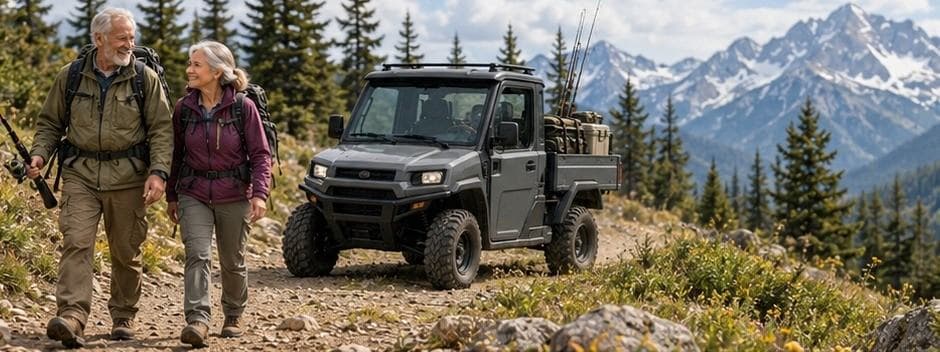
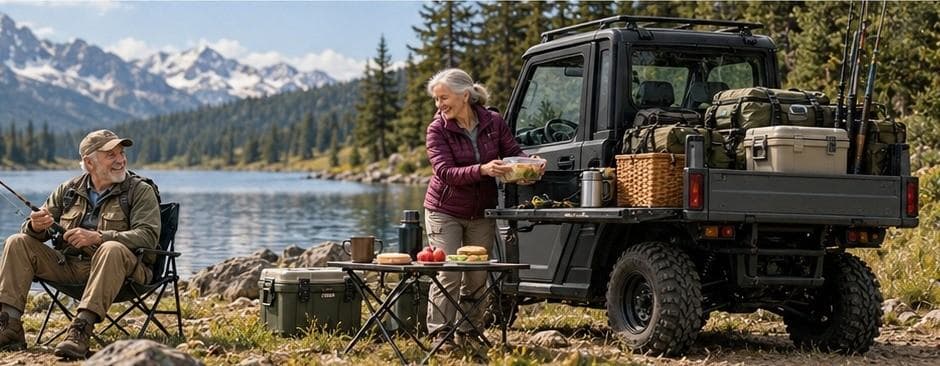
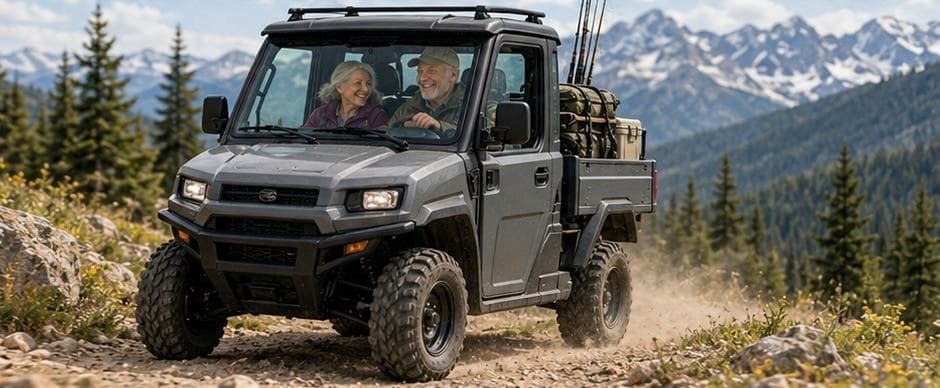
Concept renderings. This use case works with Phase 1 capability: Follow-Me, cargo capacity and a driver’s seat. Full autonomous navigation is not required.
Conventional UTV: drive only.
OPPY: walk out, ride back.
Especially useful for older outdoor users. The trail is open to anyone who does not want to commit to walking the full distance home.
Follow when people move. Shuttle when the load moves. Drive when needed.
Three operating modes, one vehicle. That is why the same platform serves a farm, a cut block and a forward position.
“Affordable, high-impact uncrewed system technologies.”
Uncrewed systems are a named sovereign capability priority. The Defence Drone Initiative launched in July 2026 as a standing marketplace.
Ammunition, water and batteries still move forward on a soldier's back over the last kilometres. The Army's MINERVA Initiative runs an uncrewed ground cargo challenge, accepting solutions from TRL 5.
Domestic production and cost-effectiveness appear in the requirement language itself.
Qualification is not a contract. What it is, is access: Speak & Act is already inside the two channels through which Canadian ground-autonomy work is placed. Canada defines the critical components of a domestically produced system as the radio, ground station, on-board computer and software. Those are the parts we build.
Each phase ends in something you can watch working. The target is TRL 6, and the minimum milestone is TRL 5.
Two vehicles, one engineering mule and one clean demonstrator, running Follow-Me, two gesture commands and operator override, with the autonomy hardware installed. A written test and evidence package, with pilot sites identified and prepared.
TRL is the technology readiness level scale. TRL 1 is a basic idea and TRL 9 is a system proven in operations. Speak & Act and OPPY are at TRL 2 today.

Founder and CEO
25+ years taking mobility technology from R&D through to volume production.

R&D Manager
Owns the OPPY bill of materials and production cost model.
Speak & Act Inc. was incorporated in Canada in 2025 as a project company to develop and commercialize OPPY. It is Alberta incorporated, BC registered, with its head office in Vancouver.
OPPY’s software, integration and test data are developed in Canada and owned by Speak & Act.
A defence program, a working site that needs a load moved, or a partner who wants to sell it. Tell us what you need to move and where.